
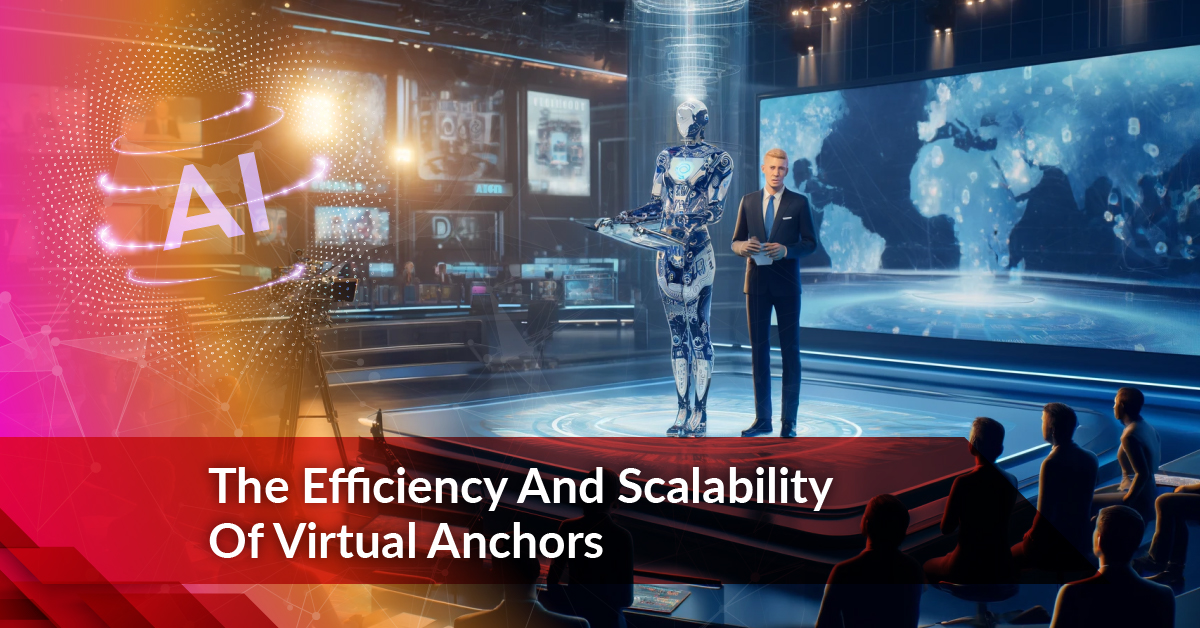
In the digital era, virtual anchors are rapidly emerging as an emerging form of media. They are not only popular on entertainment and social platforms, but are also gradually being used in a variety of fields such as business promotion, education and training. The efficiency and scalability of virtual anchors make them an important tool for reducing labor costs, and this paper will delve into how virtual anchors can achieve this goal.
1. Definition and characteristics of virtual anchor
Virtual anchor is a digital human image created using computer-generated images (CGI), artificial intelligence (AI) and natural language processing technology. Unlike traditional anchors, virtual anchors can be online 24/7 and interact with viewers in real time without taking breaks or vacations. They can simulate the voice and movements of real people, bringing viewers an immersive experience. These features make virtual anchors have great potential in various industries.
2. Efficiency: Reduce time and labor investment
The efficiency of virtual anchors is reflected in several aspects. First, they are able to produce content quickly, without having to spend as much time preparing and rehearsing as human anchors. For example, virtual anchors can complete a live broadcast in minutes, whereas traditional anchors may need hours or days of preparation. Second, virtual anchors can perform multiple live broadcasts at the same time, reaching a wider audience base. In this way, companies can get higher exposure and influence with less labor investment.
3. Scalability: meeting diversified needs
The scalability of virtual anchor makes it easy to adapt to various needs and occasions. Enterprises can customize the appearance and style of virtual hosts according to their own brand image and audience preferences. This flexibility allows the avatar to better convey the brand message in marketing campaigns. In addition, virtual anchors can broadcast in multiple languages according to different languages and cultural backgrounds, helping companies to expand their influence in the global market.
4. Reduce labor costs: optimize resource allocation
Due to the efficiency and scalability of virtual anchors, enterprises can significantly reduce labor costs. Traditional media activities usually require teamwork, including content creators, photographers, editors and other positions. With virtual anchors, enterprises can integrate these roles into a single system, reducing staffing and thus optimizing resource allocation. In addition, the use of virtual anchors can also reduce the additional costs brought about by human resource management, training and welfare.
5. Ongoing technological development and future outlook
As technology continues to advance, the expressiveness and interactivity of virtual anchors will be further enhanced. advances in AI technology enable virtual anchors to better understand the audience’s emotions and feedback, thus providing more personalized services. In the future, virtual anchors will not only play an important role in the field of entertainment and marketing, but may also expand to more industries such as education and healthcare, becoming a bridge for efficient communication in various fields.
Conclusion
As an innovative form of media, virtual anchor shows great potential in reducing labor costs with its efficiency and scalability. With the continuous progress of technology, virtual anchor will play an increasingly important role in various industries, helping enterprises to stand out in the fierce market competition. In the future, virtual anchors will not only change the way we work, but also bring us a new communication experience. With the continuous development of this field, enterprises should seize this opportunity and use virtual anchors to optimize resource allocation and achieve sustainable growth.
Are you ready to dive deeper into the topics you love? Visit our website and discover a treasure trove of articles, tips, and insights tailored just for you!